If you are driving for Uber, Lyft, DoorDash, or Spark without strictly tracking your mileage, you are essentially paying extra taxes that you do not owe. For an independent contractor, every mile driven for business is a direct reduction of your taxable income.
With the IRS officially raising the standard business mileage rate to 72.5 cents per mile for 2026, there has never been a more crucial time to get your expense tracking locked in.
Here is exactly how to keep more of your hard-earned profits:
1. Understand the Power of the 72.5 Cent Rate
Think about this: if you drive 10,000 miles for delivery work this year, that equates to a $7,250 tax deduction. You do not need to keep every single gas receipt or oil change invoice if you use the standard mileage deduction, but you absolutely must have an accurate log of your miles.
2. Ditch the Pen and Paper for Automation
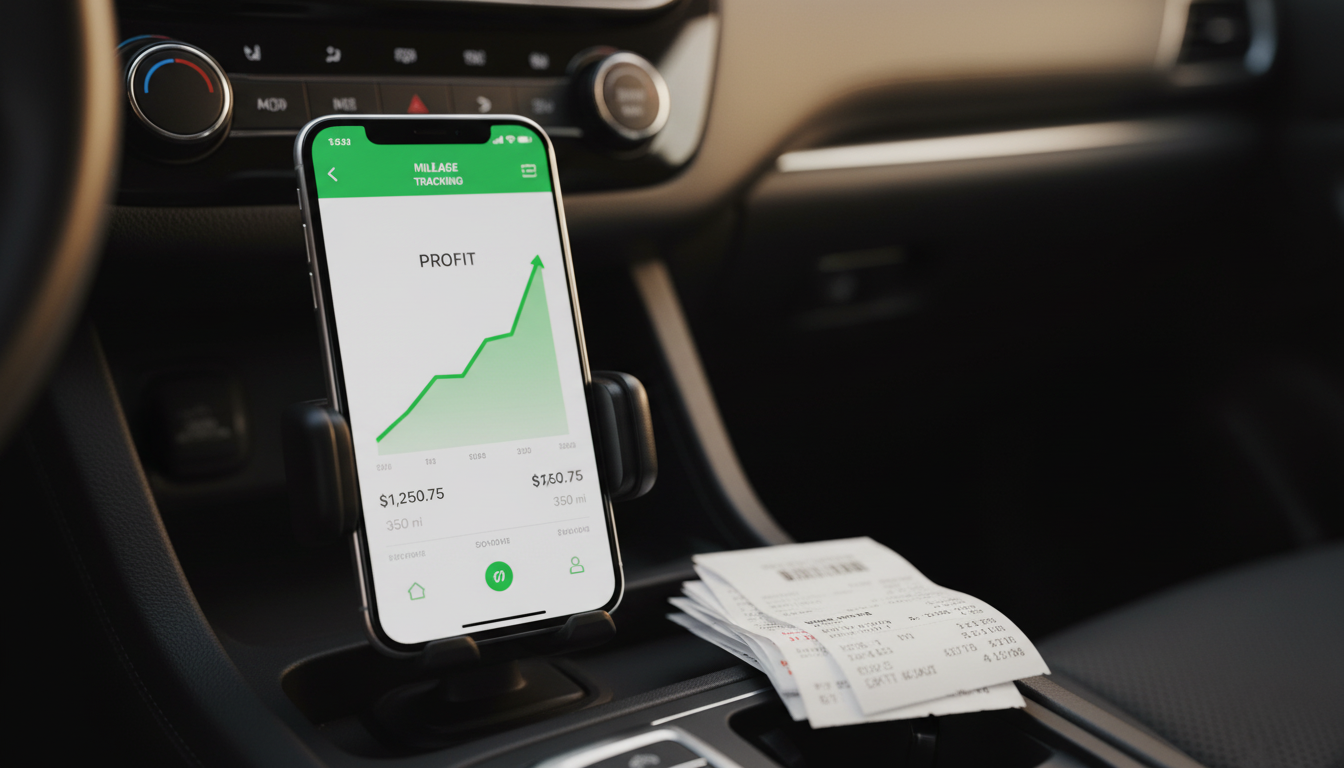
Do not rely on your memory or a messy notebook in the glovebox. To maximize your deductions and protect yourself in an audit, you need a passive tracking app. Applications like Everlance or Upper Solo are built specifically for gig workers. They run silently in the background of your phone, automatically logging every drive. At the end of your shift, you simply swipe right for business and left for personal.
3. Track the “Hidden” Business Expenses
Mileage is your biggest write-off, but it is not the only one. Anything you purchase specifically to run your delivery business is tax-deductible. This includes:
- Hot bags and catering equipment
- Dashcams and phone mounts
- Toll fees and business-related parking
- The percentage of your cell phone bill used while running the delivery apps
Your vehicle is a tool, and your time is valuable. By setting up an automated mileage tracker today, you ensure that you keep the maximum amount of profit in your pocket at the end of the year.